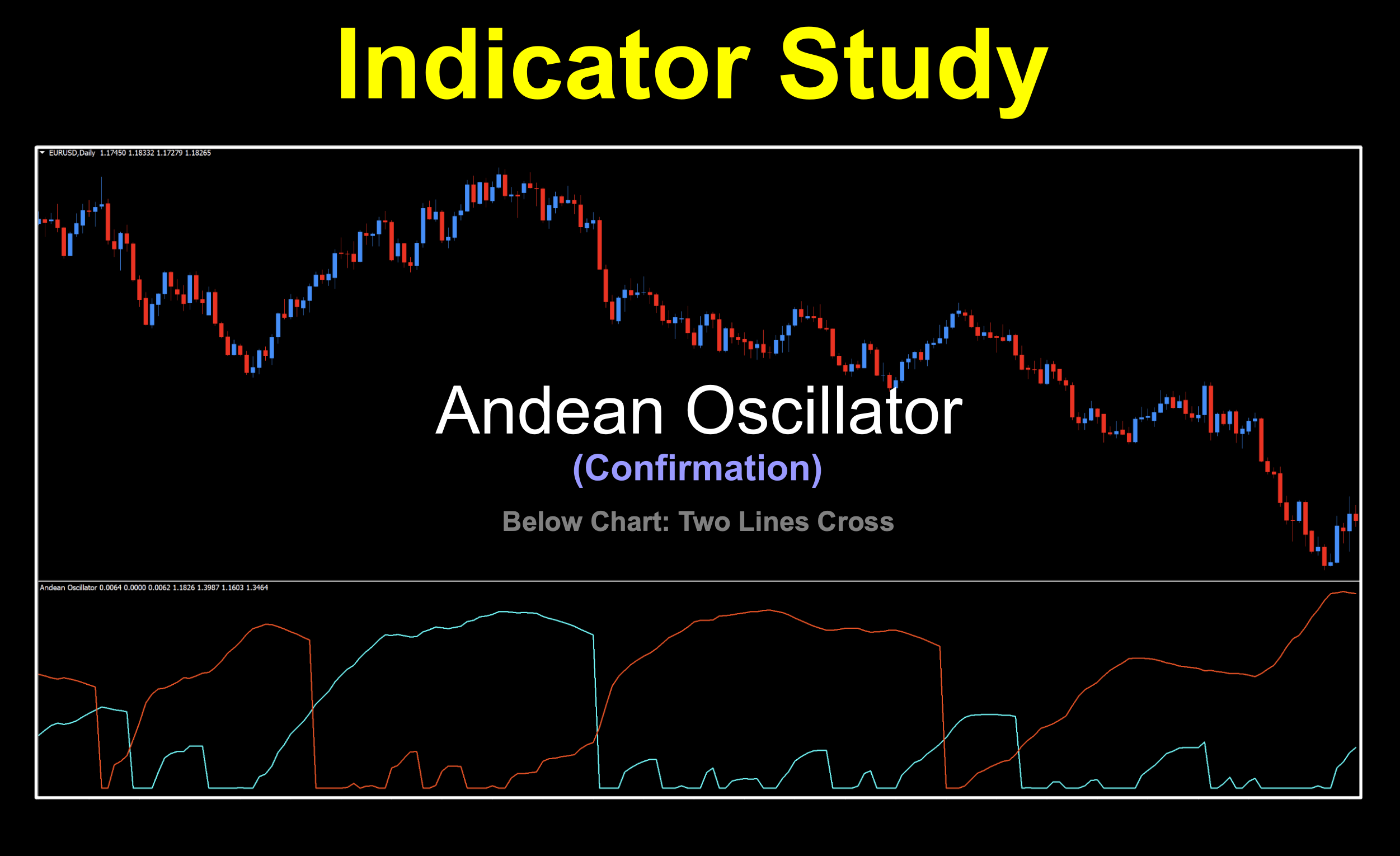
Cold Weather Tools
Ice scrapers, snow boots, and ice melt are just a sampling of tools for cold weather conditions…unless you’re near the equator or in the southern hemisphere. Then we, who reside in the northern hemisphere, are a bit jelly at the moment.
By Any Other Name
This indicator caught our eye because the name reminded us of the Andean mountains in South America…or maybe it was that quaint after-dinner mint chocolate, Andes Candies, developed by Greek genius George Andrew Kanelos back in 1921. Thankfully, this indicator is not that old. But hey, thanks for the treats!

Whole Lotta Math
The premise of this indicator is the strength of bull and bear “pressure” on the market and has some pretty high-end math. Specifically;
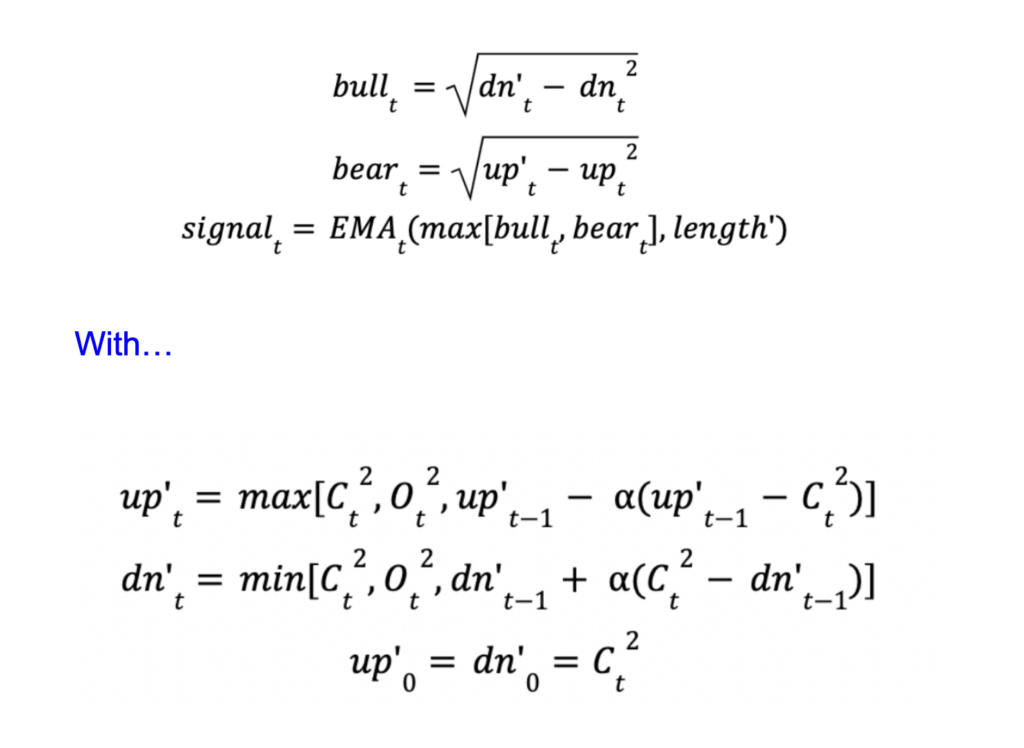
Where EMA denotes an exponential moving average (natch). The calculations for “up_t” and “dn_t” are given in the exponential envelopes section.
Third Thing
Other than the two signal lines (bulls/bears), there is actually a third signal line, which is a moving average line. During our research, we determined that it was used mostly for an exit strategy and seemed to hamper entry signals, so we excluded it in our displays and testing, which we’ll cover shortly. By the way, the developer of this indicator is named Alex Pierrefeu who created it in 2022.
Original View
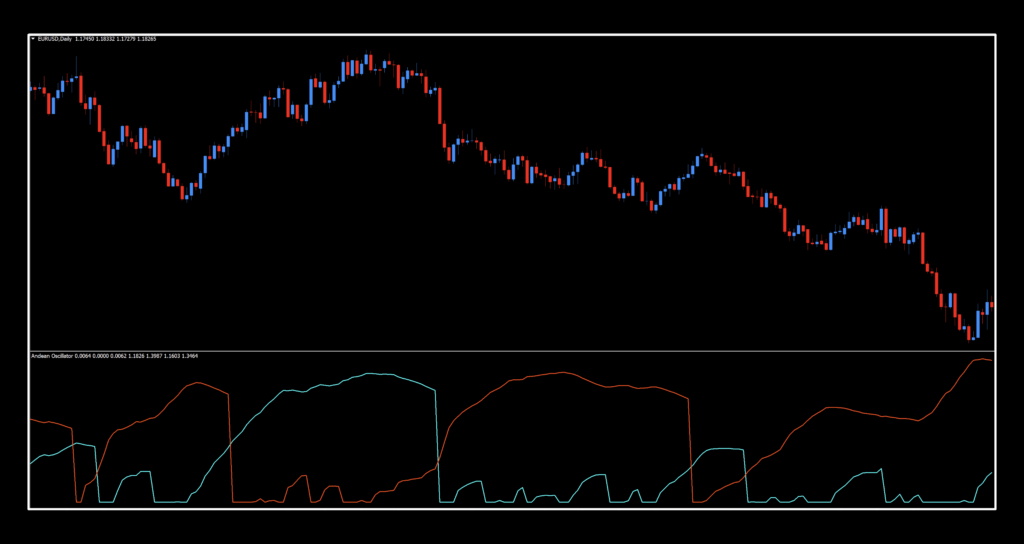
The image below is the “fresh outta the box” imagery of the indicator. We thickened the lines a bit for better visuals.
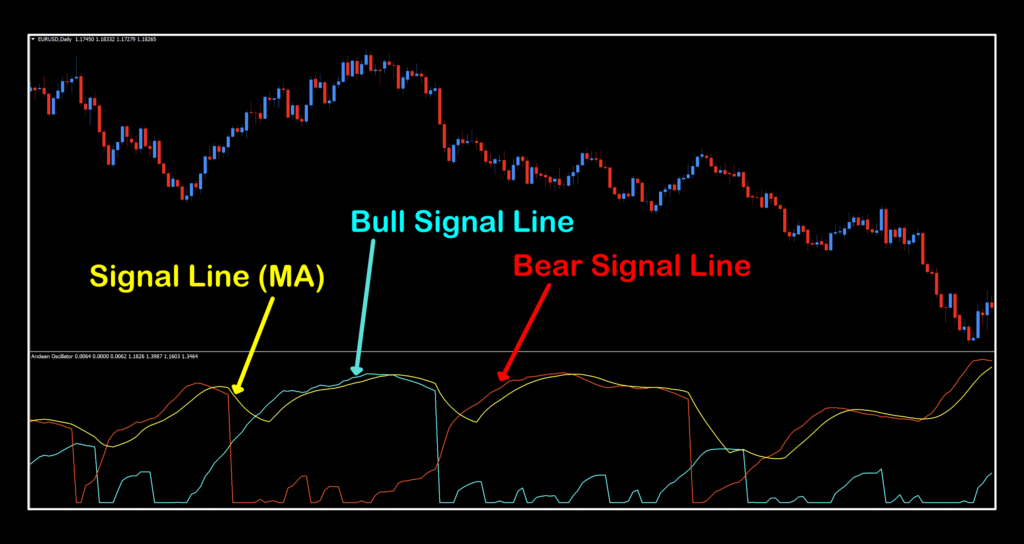
Since we’re not using the Signal Line (MA), we’ll take that off.
Furiously Fast
One thing we noticed visually is how quickly the market pressure changed from one to the other, as depicted at each blue/red cross. This is definitely helpful, unlike others where you have to call up the data window to verify whether a signal was printed on the chart. Good stuff.
Settings
This indicator has a few settings, but we’re really only interested in one of them.
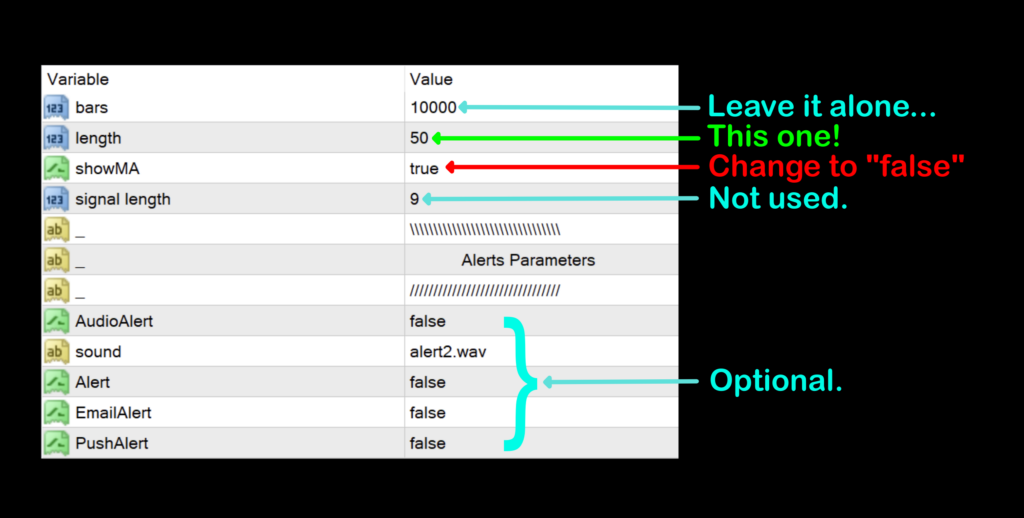
bars: The number here represents how many periods to apply the calculations (and therefore signal lines printed) on the chart.
length: This is the main variable that controls both signal lines. We use this one. The default setting is 50.
showMA: This toggles the print/no print of the signal line (MA); i.e., the yellow line. Turn this to “false”.
signal length: The period setting for the Signal Line (MA). You can just leave this alone as we’re not using this line.
Alert Parameters: These are related to various kinds of alerts and are optional.
Doing The Deed
Once you’re ready to perform daily maintenance on your trades during the last 20–30 minutes of the trading day (1700 New York time), you’ll be presented with one of four options.
- Opening a trade.
- Closing a trade
- Maintaining a trade; i.e.
- Moving a stop loss level.
- Exiting a trade.
- Taking a pass (nothing to do).
Doing a Thing
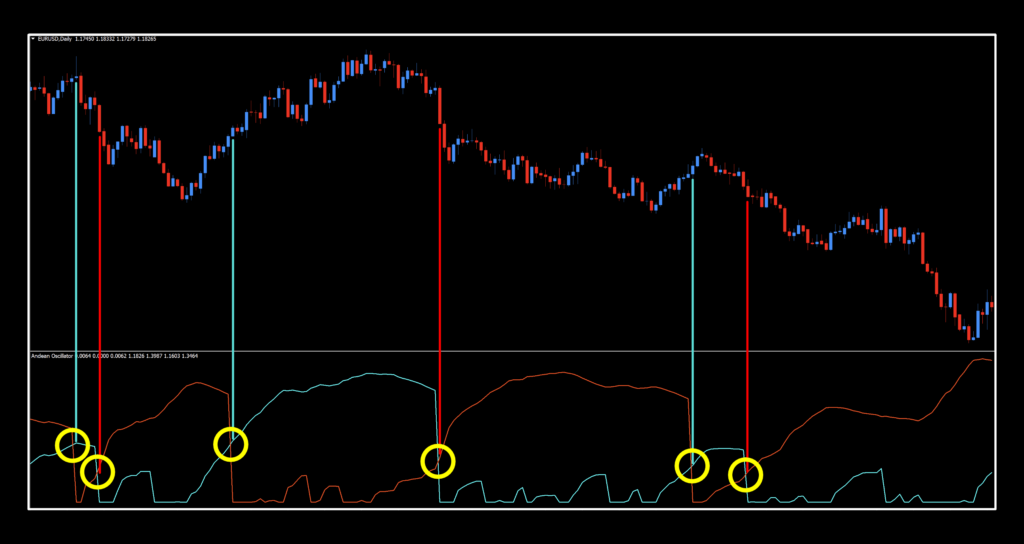
Looking at the signals, the shorter runs didn’t seem to do as well, although the default value of 50 may have something to do with that. Good thing we have the ability to do something about it. Exits were a bit slow, but again, this may not be the best for that purpose. Let’s go see how it did.
Close Scrutinization
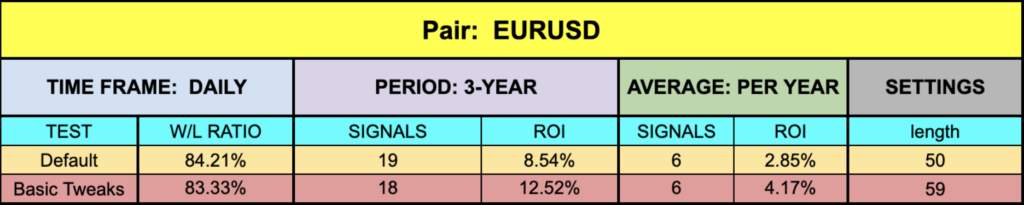
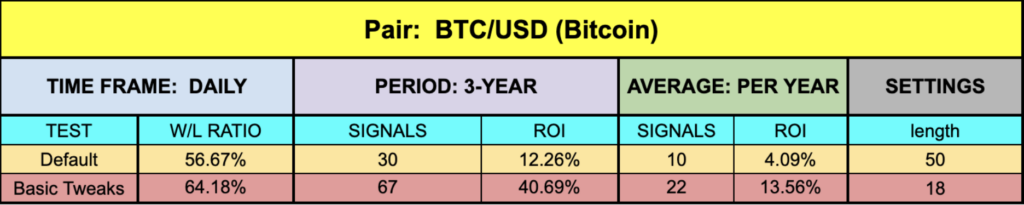
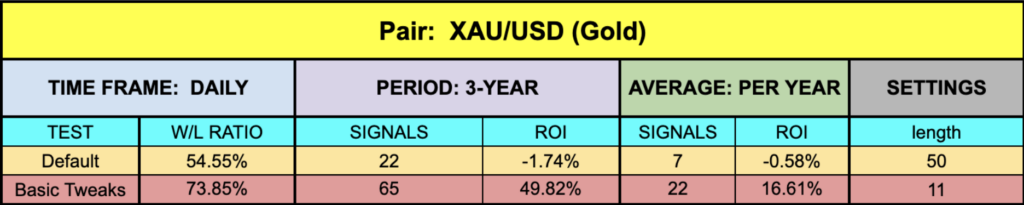
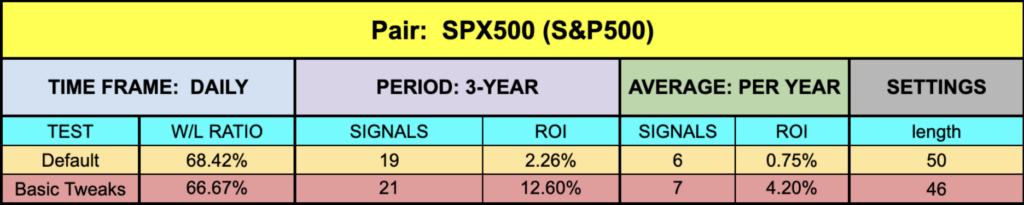
Not too bad across the board. EUR and SPX were neck and neck once we applied the tweaked settings, but the default numbers on the EUR were actually okay. Of course, BTC and XAU did nicely, with the number of signals keeping pace with the decent ROI percentages.
Resources
The Andean Oscillator indicator is available in the Stonehill Forex library for free and will have “NEW” in red to alert you to its location. Get it HERE. Andes Candies can be found at your favorite supermarket and hiking in the Andes Mountains can probably be arranged by your local travel agent. Don’t forget to the Stonehill Forex YouTube channel to watch the technical analysis portion of this week’s installment. For fast-tracking your trading success, be sure to consider the Advanced NNFX Course HERE.
Our only goal is to make you a better trader.
*Our published testing results are based on money management strategies employed by the NNFX system and depend on varying external factors, which may be different between individuals and their specific broker conditions. No guarantee, trading recommendations, or other market suggestions are implied. Your results and subsequent trading activities are solely your own responsibility.
BTW — Any information communicated by Stonehill Forex Limited is solely for educational purposes. The information contained within the courses and on the website neither constitutes investment advice nor a general recommendation on investments. It is not intended to be and should not be interpreted as investment advice or a general recommendation on investment. Any person who places trades, orders or makes other types of trades and investments etc. is responsible for their own investment decisions and does so at their own risk. It is recommended that any person taking investment decisions consults with an independent financial advisor. Stonehill Forex Limited training courses and blogs are for educational purposes only, not a financial advisory service, and does not give financial advice or make general recommendations on investment.